



When you need strong, reliable welds, MIG welding often tops the list of options. Whether you’re designing components for aerospace systems, automotive assemblies, or medical devices, understanding what MIG welding is used for can help you make smarter decisions about your next project.
This guide breaks down MIG welding fundamentals, explores its most common applications, and helps you determine when it’s the right choice for your manufacturing needs.
What Is MIG Welding?
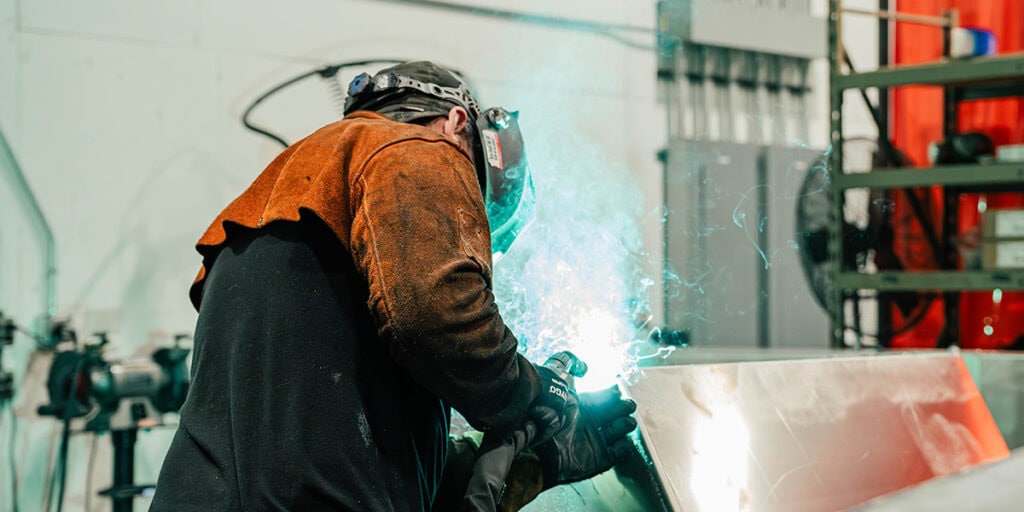
MIG welding stands for Metal Inert Gas welding, though it’s also known as Gas Metal Arc Welding (GMAW). The process uses a continuously fed wire electrode and a shielding gas to create strong, clean welds.
Here’s how it works: An electric arc forms between the wire electrode and the workpiece, melting both to create a weld pool. Meanwhile, an inert gas (typically argon, carbon dioxide, or a mixture) shields the weld from atmospheric contamination. This protection prevents oxidation and produces cleaner results.
The process is semi-automatic or fully automatic, which means welders can maintain consistent feed rates and arc lengths throughout the weld. According to the American Welding Society, MIG welding ist the most widely used welding process in industrial manufacturing.
Common MIG Welding Applications
So, what is MIG welding used for in real-world manufacturing? The applications span nearly every major industry.
Automotive Manufacturing
MIG welding is the backbone of automotive production. Manufacturers rely on it for body panels, exhaust systems, frames, and structural components. The speed of MIG welding makes it ideal for high-volume production lines where efficiency matters.
Aerospace Components
Aircraft and spacecraft require welds that meet strict quality standards. MIG welding works well for aluminum alloys and other lightweight materials common in aerospace applications. The process delivers the precision and consistency these critical components demand.
Medical Device Fabrication
Medical equipment often requires stainless steel or aluminum components with clean, precise welds. MIG welding produces smooth finishes with minimal spatter, reducing post-weld cleanup and supporting compliance with medical industry standards.
Defense and Military Equipment
Military applications require durable, reliable welds that can withstand harsh conditions. MIG welding handles the thick materials and demanding specifications typical in defense manufacturing.
General Industrial Fabrication
From electronics enclosures to telecommunications equipment, MIG welding serves countless industrial applications. Its versatility across material types and thicknesses makes it a go-to process for custom fabrication projects.
Materials Compatible with MIG Welding
One reason MIG welding is so popular is its compatibility with multiple materials:
- Carbon Steel: The most common material for MIG welding, used in structural applications and general fabrication
- Stainless Steel: Ideal for corrosion-resistant components in medical, food processing, and chemical industries
- Aluminum: Requires specific wire and gas combinations but produces excellent results for lightweight assemblies
- Nickel Alloys: Used in high-temperature and corrosive environments
Material thickness also affects MIG welding suitability. The process handles thin sheet metal through medium-thickness plates effectively, typically ranging from 24-gauge sheet up to about ½ inch thick.
Key Benefits of MIG Welding
Understanding the advantages helps you evaluate whether MIG welding fits your project requirements.
Speed and Efficiency
MIG welding is significantly faster than processes like TIG welding. The continuous wire feed eliminates stops for electrode changes, keeping production moving. For high-volume projects with tight timelines, this efficiency translates to real cost savings.
Precision and Consistency
Modern MIG welding equipment delivers repeatable results with tight tolerances. This consistency matters when you’re manufacturing components that must meet exact specifications across large production runs.
Cleaner Welds
The shielding gas protects the weld pool from contamination, resulting in less spatter and cleaner finished welds. This reduces post-weld grinding and cleanup, saving time and labor costs.
Cost-Effectiveness
Lower labor costs, faster production times, and reduced material waste make MIG welding economical for many applications. The process requires less operator skill than some alternatives, though quality still depends on proper technique and equipment setup.
When to Choose MIG Welding vs. Other Methods
| Choose MIG welding when | Consider TIG welding when |
|---|---|
|
Production volume is moderate to high |
Maximum precision and appearance matter most |
|
Speed and efficiency are priorities |
Working with thin or exotic materials |
|
Materials include steel, stainless steel, or aluminum |
Lower production volumes allow for slower speeds |
|
Weld aesthetics are important but not critical |
|
Consider other processes when:
- Materials are extremely thick (may need flux-cored or stick welding)
- Field conditions prevent proper shielding gas coverage
Many manufacturing partners offer both manual and robotic MIG welding capabilities, allowing flexibility based on project scale and complexity.
Making the Right Decision for Your Project
Choosing the right welding process depends on several factors: material type and thickness, production volume, timeline, budget, and required weld quality. Working with an experienced manufacturing partner helps you navigate these decisions and avoid costly mistakes.
Look for partners with certifications like ISO 9001:2015, which indicates robust quality management systems. RoHS compliance matters if your products will enter markets with environmental regulations.
Next Steps
Understanding what MIG welding is used for gives you a foundation for smarter fabrication decisions. Whether you’re prototyping a new design or scaling up production, the right welding process—and the right manufacturing partner—can make all the difference.
Ready to discuss your next welding project? Request a Quote to connect with experienced engineers who can help you explore how MIG welding might deliver precision results for your application.
![Let’s Build Something Better Together! [Submit Your RFQ]](https://met-mfg.com/wp-content/uploads/20250923_MET_RFQCTA-01-1024x512.png "20250923_MET_RFQCTA-01 | MET Manufacturing Group, LLC | MET Manufacturing Group, LLC")
Comments are closed