



Ultimate MIG Welding Guide Made Simple
Comments Off on Ultimate MIG Welding Guide Made SimpleWhen you need strong, reliable welds, MIG welding often tops the list of options. Whether you’re designing components for aerospace systems, automotive assemblies, or medical devices, understanding what MIG welding is used for can help you make smarter decisions about your next project.
This guide breaks down MIG welding fundamentals, explores its most common applications, and helps you determine when it’s the right choice for your manufacturing needs.
What Is MIG Welding?
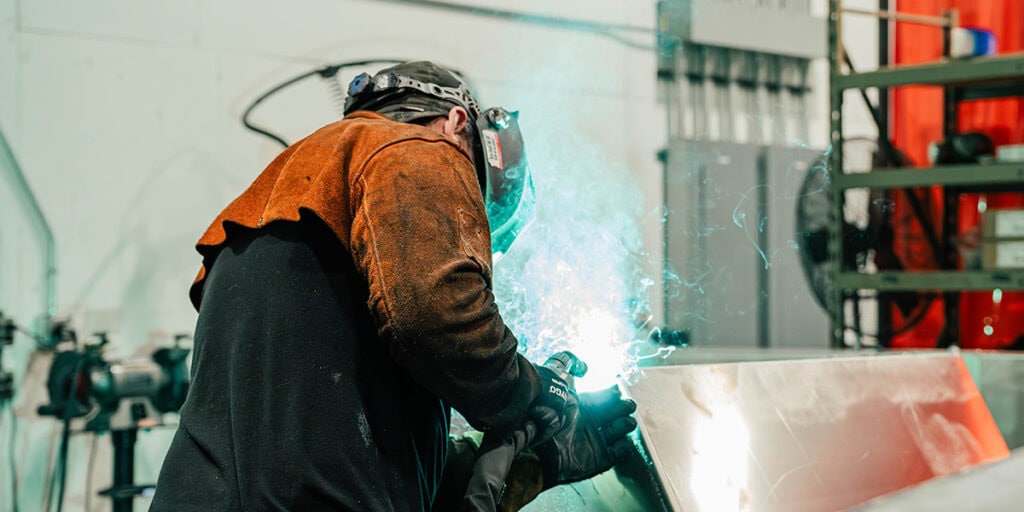
MIG welding stands for Metal Inert Gas welding, though it’s also known as Gas Metal Arc Welding (GMAW). The process uses a continuously fed wire electrode and a shielding gas to create strong, clean welds.
Here’s how it works: An electric arc forms between the wire electrode and the workpiece, melting both to create a weld pool. Meanwhile, an inert gas (typically argon, carbon dioxide, or a mixture) shields the weld from atmospheric contamination. This protection prevents oxidation and produces cleaner results.
The process is semi-automatic or fully automatic, which means welders can maintain consistent feed rates and arc lengths throughout the weld. According to the American Welding Society, MIG welding ist the most widely used welding process in industrial manufacturing.
Common MIG Welding Applications
So, what is MIG welding used for in real-world manufacturing? The applications span nearly every major industry.
Automotive Manufacturing
MIG welding is the backbone of automotive production. Manufacturers rely on it for body panels, exhaust systems, frames, and structural components. The speed of MIG welding makes it ideal for high-volume production lines where efficiency matters.
Aerospace Components
Aircraft and spacecraft require welds that meet strict quality standards. MIG welding works well for aluminum alloys and other lightweight materials common in aerospace applications. The process delivers the precision and consistency these critical components demand.
Medical Device Fabrication
Medical equipment often requires stainless steel or aluminum components with clean, precise welds. MIG welding produces smooth finishes with minimal spatter, reducing post-weld cleanup and supporting compliance with medical industry standards.
Defense and Military Equipment
Military applications require durable, reliable welds that can withstand harsh conditions. MIG welding handles the thick materials and demanding specifications typical in defense manufacturing.
General Industrial Fabrication
From electronics enclosures to telecommunications equipment, MIG welding serves countless industrial applications. Its versatility across material types and thicknesses makes it a go-to process for custom fabrication projects.
Materials Compatible with MIG Welding
One reason MIG welding is so popular is its compatibility with multiple materials:
- Carbon Steel: The most common material for MIG welding, used in structural applications and general fabrication
- Stainless Steel: Ideal for corrosion-resistant components in medical, food processing, and chemical industries
- Aluminum: Requires specific wire and gas combinations but produces excellent results for lightweight assemblies
- Nickel Alloys: Used in high-temperature and corrosive environments
Material thickness also affects MIG welding suitability. The process handles thin sheet metal through medium-thickness plates effectively, typically ranging from 24-gauge sheet up to about ½ inch thick.
Key Benefits of MIG Welding
Understanding the advantages helps you evaluate whether MIG welding fits your project requirements.
Speed and Efficiency
MIG welding is significantly faster than processes like TIG welding. The continuous wire feed eliminates stops for electrode changes, keeping production moving. For high-volume projects with tight timelines, this efficiency translates to real cost savings.
Precision and Consistency
Modern MIG welding equipment delivers repeatable results with tight tolerances. This consistency matters when you’re manufacturing components that must meet exact specifications across large production runs.
Cleaner Welds
The shielding gas protects the weld pool from contamination, resulting in less spatter and cleaner finished welds. This reduces post-weld grinding and cleanup, saving time and labor costs.
Cost-Effectiveness
Lower labor costs, faster production times, and reduced material waste make MIG welding economical for many applications. The process requires less operator skill than some alternatives, though quality still depends on proper technique and equipment setup.
When to Choose MIG Welding vs. Other Methods
| Choose MIG welding when | Consider TIG welding when |
|---|---|
|
Production volume is moderate to high |
Maximum precision and appearance matter most |
|
Speed and efficiency are priorities |
Working with thin or exotic materials |
|
Materials include steel, stainless steel, or aluminum |
Lower production volumes allow for slower speeds |
|
Weld aesthetics are important but not critical |
|
Consider other processes when:
- Materials are extremely thick (may need flux-cored or stick welding)
- Field conditions prevent proper shielding gas coverage
Many manufacturing partners offer both manual and robotic MIG welding capabilities, allowing flexibility based on project scale and complexity.
Making the Right Decision for Your Project
Choosing the right welding process depends on several factors: material type and thickness, production volume, timeline, budget, and required weld quality. Working with an experienced manufacturing partner helps you navigate these decisions and avoid costly mistakes.
Look for partners with certifications like ISO 9001:2015, which indicates robust quality management systems. RoHS compliance matters if your products will enter markets with environmental regulations.
Next Steps
Understanding what MIG welding is used for gives you a foundation for smarter fabrication decisions. Whether you’re prototyping a new design or scaling up production, the right welding process—and the right manufacturing partner—can make all the difference.
Ready to discuss your next welding project? Request a Quote to connect with experienced engineers who can help you explore how MIG welding might deliver precision results for your application.
![Let’s Build Something Better Together! [Submit Your RFQ]](https://met-mfg.com/wp-content/uploads/20250923_MET_RFQCTA-01-1024x512.png "20250923_MET_RFQCTA-01 | MET Manufacturing Group, LLC")
From Hand to Machine: MET’s Welding Services
Comments Off on From Hand to Machine: MET’s Welding ServicesAt MET Manufacturing Group, we combine decades of hands-on experience with cutting-edge robotic technology to deliver superior welding services tailored to meet diverse project needs. Whether your project requires artisan-level craftsmanship or high-volume automated consistency, our manual and robotic welding capabilities ensure precise, reliable results across automotive, aerospace, medical, and defense industries.
Introduction to Welding Services at MET Manufacturing
Our expertise blends traditional craftsmanship with modern technology, ensuring each project meets the highest quality standards. With both manual and robotic welding offerings, we customize solutions to match the unique demands of every client. We’re proud to adhere to stringent certifications such as ISO 9001:2015 and RoHS compliance, reinforcing our commitment to quality, precision tolerances, and client success.
Understanding Manual Welding: The Human Touch
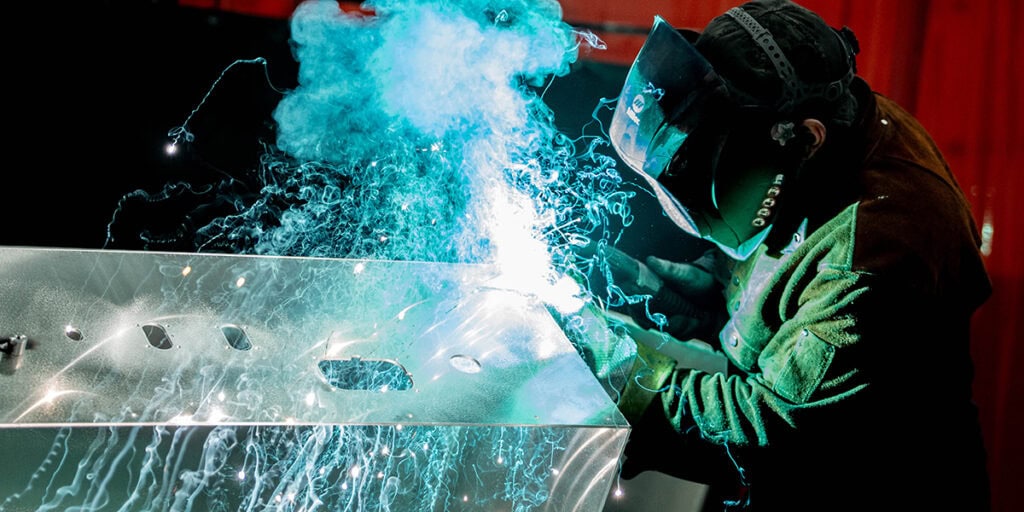
Manual welding remains essential when precision and customization are required. At MET Manufacturing, our skilled technicians operate state-of-the-art Lincoln Powerwave 300c welders, mastering techniques across a variety of materials including aluminum, steel, and stainless steel. This hands-on process is ideal for applications such as custom prototyping, specialty repairs, and small batch manufacturing.
Customers benefit greatly from direct engagement with our manual welding experts. This collaboration facilitates hands-on testing and ensures exacting tolerances are met. For example, automotive bracket prototypes often require the nuanced adjustments a seasoned welder can provide, while aerospace assemblies demand meticulous attention to detail for critical safety compliance.
Robotic Welding: Automated Consistency and Efficiency
As manufacturing trends shift toward automation, MET Manufacturing is proud to incorporate advanced robotic welding solutions. Our Lincoln Electric Cooper Welding Cobot is designed for collaborative use, allowing safe interaction between human operators and robots. This technology enables rapid setup and programming to tackle complex welds with consistent precision.
Robotic welding offers significant advantages including uniform quality, fast turnaround, reduced per-unit costs, and minimized material waste. These benefits are especially valuable in high-volume sectors like automotive, electronics, and defense, where repeatability and scalability are paramount. For instance, automotive manufacturers rely on robotic systems to produce rugged components with exacting durability standards.
Materials and Industries Served
MET Manufacturing is equipped to weld steel, aluminum, and stainless steel—metals commonly demanded by our key industries. Each sector presents unique welding challenges:
Automotive
Requires rugged, durable components that withstand heavy use
Aerospace
Needs extreme precision and regulatory compliance for safe assembly
Medical Devices
Demands clean, precise welds for enclosures and instruments
Military and Defense
Calls for the highest quality standards and reliability under harsh conditions
Our team understands these demands and is dedicated to meeting or exceeding industry standards and customer specifications every time.
Choosing Between Manual and Robotic Welding: Which is Right for Your Project?
Determining whether manual or robotic welding fits your project depends on several factors:
- Volume and Scale: Larger productions benefit from robotic consistency
- Complexity and Precision: Highly customized or intricate welds often require manual skill
- Project Timeline and Budget: Robots can accelerate high-volume runs, manual welding offers flexible timing for prototypes
- Customization: Manual welding allows artisanship, robotic systems deliver repeatable quality
Often, the best solution leverages both approaches—combining the craftsmanship of manual welding with the efficiency and uniformity of automation. Our engineering team works closely with you to recommend the right mix.
Why Partner with MET Manufacturing Group for Your Welding Needs?
Choosing MET Manufacturing Group means partnering with industry veterans who blend experience and innovation. Our quality assurance is backed by ISO 9001:2015 certification and RoHS compliance, giving you confidence in every weld. Transparent communication and engineer-client collaboration make project execution stress-free, delivering precise tolerances and reliable results every time.
We are committed to continuous improvement, integrating advanced technology like the Lincoln Powerwave 300c and Cooper Welding Cobot to stay ahead in manufacturing excellence.
Ready to Elevate Your Welding Projects?
Discover how MET Manufacturing’s expert manual and robotic welding services can bring your next project to life with precision and efficiency. Whether you need the nuanced skill of manual welding or the speed of robotic automation, we tailor solutions that fit your goals.
Contact us today to request a quote or discuss your project requirements with our experienced engineering team!