

Unlocking Precision and Efficiency: The Benefits of Laser Cutting
Comments Off on Unlocking Precision and Efficiency: The Benefits of Laser CuttingIn today’s fast-paced manufacturing world, precision, speed, and efficiency are more crucial than ever. At MET Manufacturing Group, we understand that choosing the right cutting technology can make all the difference in your production process. That’s why laser cutting has become a game-changer for many industries, providing unmatched accuracy, versatility, and cost-effectiveness.
In this post, we’ll explore what laser cutting is, its major benefits, and why MET Manufacturing Group is your trusted partner for laser cutting services. Whether you’re in automotive, aerospace, or custom fabrication, understanding these advantages can help you optimize your manufacturing process and stay ahead of the competition.
What is Laser Cutting?
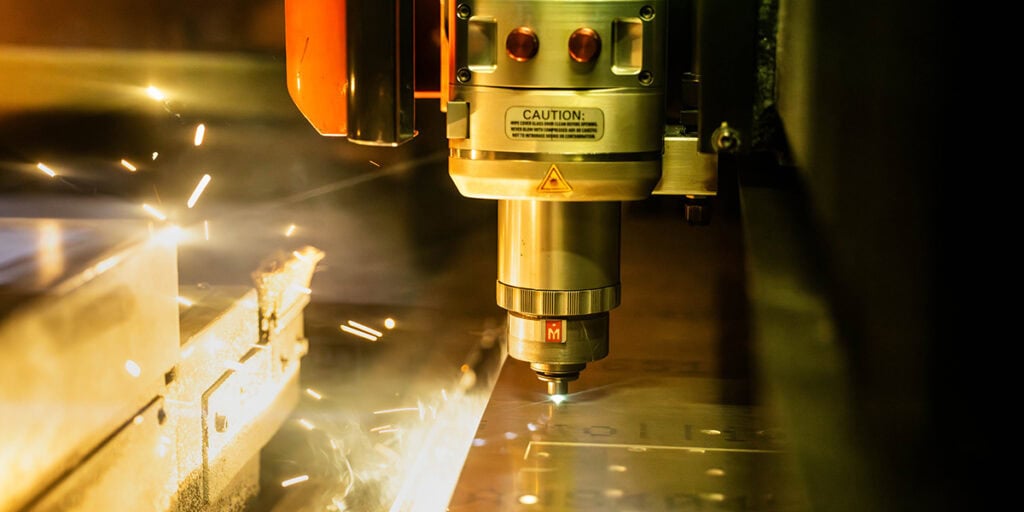
Laser cutting is a manufacturing process that uses a focused beam of light to cut and engrave various materials with incredible precision. The laser’s intense heat melts, burns, or vaporizes the material, leaving behind a clean, sharp edge. This technology is widely used in industries requiring detailed and complex cuts that traditional mechanical cutting methods cannot easily achieve.
Unlike conventional cutting tools, laser cutting is a non-contact process, which reduces the risk of material deformation and tool wear. From thin sheets of metal to thick industrial-grade plates, lasers adapt to different materials including steel, aluminum, plastics, and even wood.
Key Benefits of Laser Cutting
Superior Precision and Quality
Laser cutting offers a level of accuracy that traditional cutting tools simply cannot match. The beam width can be as small as 0.1 millimeters, providing incredibly detailed edges and smooth finishes. This precision means tighter tolerances and less need for secondary finishing work.
For example, MET Manufacturing Group consistently achieves tolerance levels of +/- 0.005 inches, a crucial factor in industries like aerospace and automotive, where parts must fit perfectly to function safely and effectively.
Increased Speed and Efficiency
Speed is vital in manufacturing, and laser cutting systems can operate much faster than mechanical cutting tools. Because the laser moves rapidly across the material without physical contact, it minimizes setup time and maximizes throughput.
MET’s advanced CNC laser machines can cut complex shapes in a fraction of the time it takes with traditional methods. This efficiency translates to shorter lead times, enabling you to meet tighter deadlines and reduce inventory costs.
Versatility Across Materials and Designs
From stainless steel sheets to acrylic panels, laser cutting handles a broad range of materials with ease. Additionally, it excels at producing intricate designs and complex geometries without compromising quality.
This flexibility allows MET Manufacturing Group to accommodate diverse client requirements, whether it’s a prototype, custom order, or mass production run.
Reduced Waste and Lower Costs
Laser cutting minimizes waste and cutting costs. Automated torch head changes and quick setups reduce downtime—from 20–30 minutes to about 40 seconds—enabling more frequent small-batch runs. This flexibility cuts material scrap and improves throughput. Optimized gas usage lowers consumption by up to 25%, and cleaner cuts reduce the need for secondary finishing. These efficiencies enable faster, more cost-effective production with less waste (Source: The Fabricator, 2012).
By choosing MET Manufacturing Group’s laser cutting services, businesses benefit not only from quality but also from significant cost savings.
Real-World Applications of Laser Cutting
Our laser cutting services have powered projects across multiple sectors:
Automotive
Automotive
Precision cutting of metal panels and components that require accuracy and durability.
Aerospace
Aerospace
Fabrication of lightweight, complex parts with tight tolerances.
Medical Devices
Medical Devices
Creating intricate components from biocompatible materials.
Custom Fabrication
Custom Fabrication
Producing one-of-a-kind designs with extraordinary detail.
Learn more about our laser cutting capabilities and explore case studies showcasing our expertise.
Why Choose MET Manufacturing Group for Laser Cutting?
At MET Manufacturing Group, we combine cutting-edge laser technology with unmatched expertise to deliver superior results. Our team is dedicated to understanding your unique needs, from initial design consultation to final delivery. By incorporating industry best practices and utilizing state-of-the-art CNC laser cutters, we ensure precision, speed, and efficiency every step of the way. Moreover, our commitment to quality is backed by ISO certifications and rigorous quality control processes, giving you peace of mind that your parts meet the highest standards.
Ready to experience the benefits of laser cutting for your business? Contact us today to discuss your project requirements and discover how MET Manufacturing Group can help you achieve precision and performance like never before.
Contact MET Manufacturing Group
![Let’s Build Something Better Together! [Submit Your RFQ]](https://met-mfg.com/wp-content/uploads/20250923_MET_RFQCTA-01-1024x512.png)